PIA Assists with Strategic Network Renewal
The Challenge: A Century of Service at a Crossroads
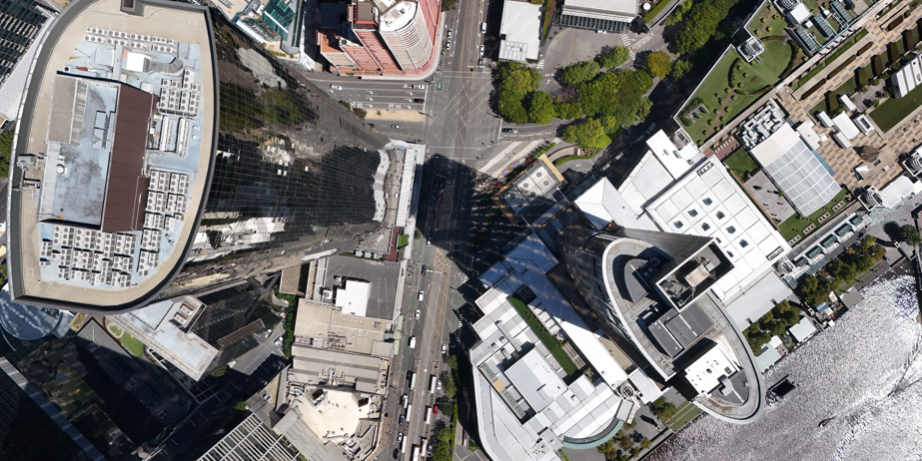
This Australian city is built upon a foundation of history, much of which is buried beneath its bustling streets. For a major utility, the state’s water utility, this history presented a significant modern-day challenge. Much of the city’s CBD water infrastructure consists of ageing cast iron pipes, some of which have been in continuous service for over a century.
While these assets have served the community for generations, the network was increasingly plagued by regular bursts. These failures were more than just a maintenance headache; they represented a range of costs and consequences, from emergency repair expenses to significant disruptions for CBD shop owners, residents, and traffic.
Recognising the inevitability of infrastructure fatigue, the forward-thinking utility initially planned a wholesale replacement of the ageing network. However, replacing an entire CBD network is a gargantuan task fraught with logistical complexity and high capital expenditure. The utility faced a critical dilemma: where to start, where to finish, and how to prioritise the most critical sections without causing unnecessary chaos in the city heart.
The Solution: Intelligence-Led Infrastructure Management
To move from a reactive “replace all” strategy to a proactive, surgical approach, the utility commissioned PIA’s ANZ partner Detection Services. The goal was to utilise a comprehensive suite of condition assessment technologies to “shine a light” on the true state of these buried assets. Central to this mission was the deployment of p-CAT™ Sonic technology and the implementation of the “Intellidig” strategy.
The p-CAT™ Sonic system offers a non-invasive, acoustic method for determining the remaining wall thickness and overall structural integrity of water mains. Unlike traditional methods that require costly excavations or service interruptions, p-CAT™ Sonic uses vibro-acoustic signals generated by controlled waves to measure the condition of the pipe wall while it remains in service.
This technical data forms the backbone of the Intellidig strategy. Intellidig is designed to assist utilities and councils in undertaking renewal projects safely and efficiently. By providing a clear picture of pipe health, it allows utilities to “dig with intelligence” – prioritising the most at-risk sections and deferring replacement for pipes that, despite their age, still possess significant service life.
Unlike traditional methods that require costly excavations or service interruptions, p-CAT™ Sonic uses vibro-acoustic signals generated by controlled waves to measure the condition of the pipe wall while it remains in service.
The Project: Assessing the City’s CBD (May 2025)
In late April and early May 2025, PIA conducted an intensive condition assessment across multiple segments of 150 mm concrete-lined cast iron pipes in the city’s CBD. To minimise the impact of ambient traffic noise, the team performed measurements during late evening and night hours.
The assessment covered critical arterial routes, including:
- East Street Mall: 318 meters across two parallel mains.
- Main Street: 257 meters between Campbell Street and the A3 junction.
- Central Street: 275 meters between Liverpool Street and Macquarie Street.
The assets tested were a true testament to the city’s history, with installation dates ranging from 1910 to 1944. Some of these pipes had been in the ground for 115 years.
Key Findings: Beyond the 100-Year Milestone
The p-CAT™ Sonic results provided the “missing link” in the utility’s planning. On average, the assessed pipes appeared to have lost approximately 40% of their original wall strength. The data also revealed that none of the segments had retained much of their original mortar lining.
However, the results also provided a surprising and valuable insight into the resilience of pre-war cast iron. The assessment noted that these older pipes are often able to withstand internal pressures far better than modern standards might suggest. Even pipes that had lost over 50% of their effective wall thickness were found to potentially support another decade of service under the right conditions.
Specific data highlights included:
- Central Street (Segment 8): Identified as a high-priority area with only 42% remaining wall strength and a remaining thickness of 6.1 mm. A strong positive correlation was also detected here, suggesting a potential small leak or noisy connection that required further ground sounding.
- East Street Mall (Segments 1-4): Showed remaining wall strengths ranging from 47.3% to 59.4%, providing a clear hierarchy for replacement.
- Main Street (Segment 5): Exhibited a robust 67.1% remaining strength, suggesting this section could be safely monitored rather than immediately replaced.
Outcomes: Mitigating Risk through Intellidig
By integrating this data into the Intellidig strategy, the utility was able to transform its renewal program. The utility moved away from a blanket replacement plan, instead strategically working through the network based on actual risk profiles.
The benefits of this approach were multi-faceted:
- Risk Mitigation for Contractors: Civil contractors were provided with a detailed understanding of the pipe’s condition before they even broke ground, identifying high-risk “soft” sections where accidental bursts during excavation were most likely.
- Minimising Disruption: By only digging where necessary, the utility significantly reduced the footprint of their construction work, preserving the accessibility of the client’s CBD for shop owners and residents.
- Cost Efficiency: Resources were focused on the segments in direst need (like the 42% strength sections on Central Street), while capital expenditure for healthier segments was strategically deferred until the latter stages of the project.
- Burst Prevention: The detection of potential leaks on Central Street allowed for “surgical” repairs before these points evolved into catastrophic bursts.
The collaboration between the utility and PIA proved that age is just a number. Through the precision of p-CAT™ Sonic and the strategic framework of Intellidig, the utility was able to navigate the complexities of a century-old network with modern-day confidence. By “shining a light” on the city’s underground assets, they have ensured a safer, more reliable, and less disruptive future for the city’s water infrastructure.
If you would like to chat with us about p-CAT Sonic, or our suite of pipeline condition assessment technologies, please get in touch.